

Mindful Monday: Why Metacognition Is Part of Executive Functioning

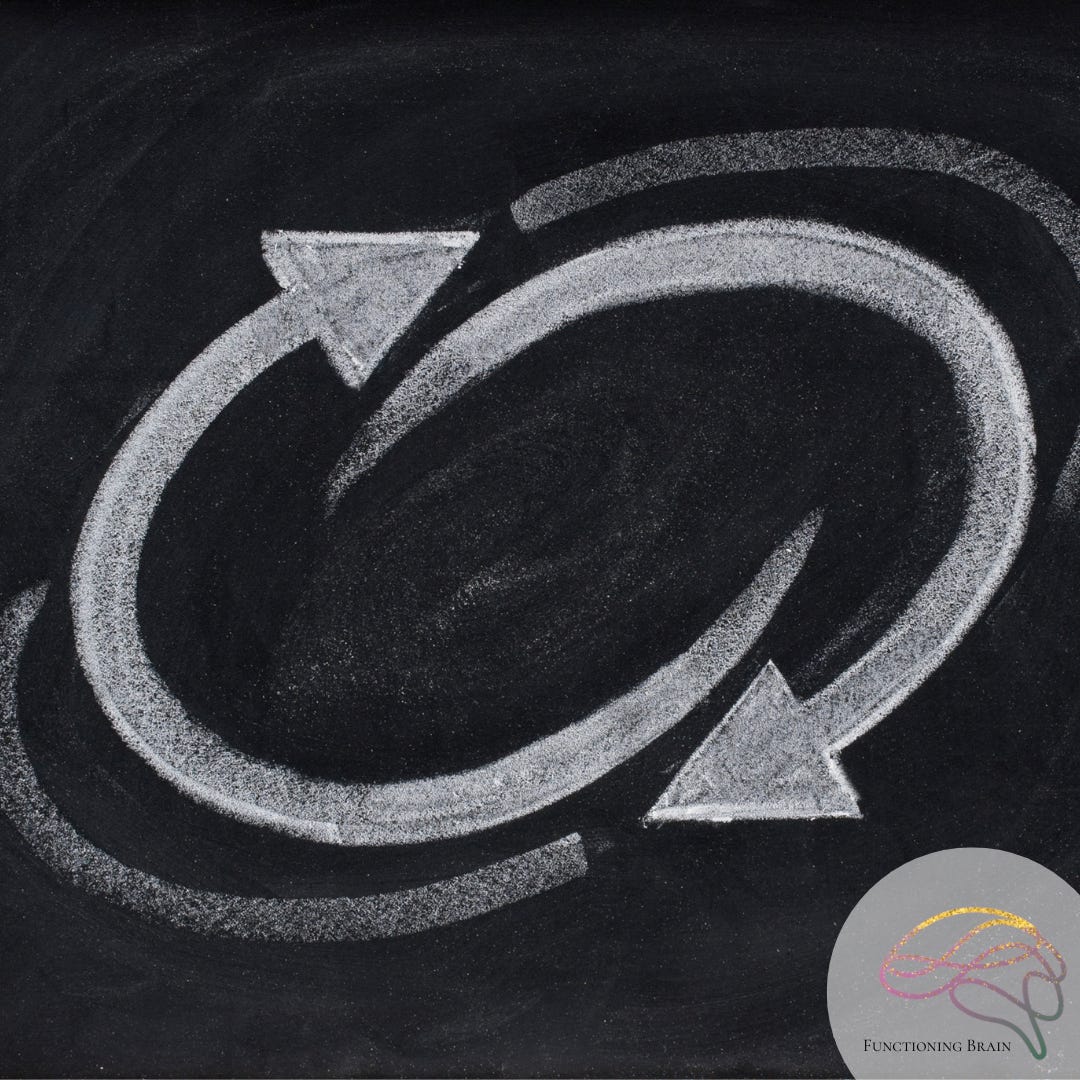
Metacognition and executive functioning are often described as separate skills — but in truth, they’re two sides of the same coin.
To use executive functioning skills well, you need metacognition.
But to think metacognitively, you have to use executive functions.
They’re not just related — they’re intertwined, interdependent, and constantly working together to help us plan, reflect, and adjust.
The Short Version:
Executive functions help you do the thinking.
Metacognition helps you notice and direct that thinking.
One is the toolbox.
The other is knowing when and how to use each tool.
Let’s Break That Down
Executive functions are the brain’s management system — skills like working memory, cognitive flexibility, planning, organization, task initiation, and self-control.
They help us get things done.
Metacognition, on the other hand, is the awareness of those mental processes — it’s how we recognize what we’re thinking, how we’re thinking, and what we might want to change.
It’s that internal conversation that says,
“Hold on, this isn’t working.”
Or, “I remember doing something like this before — what helped last time?”
So while executive functions help us take action, metacognition helps us step back, reflect, and refine our approach.
How They Work Together (and Rely on Each Other)
Metacognition uses executive functions.
To “think about your thinking,” you’re already calling on working memory (to hold ideas in mind), sustained attention (to stay focused on that reflection), and inhibition (to pause before acting).
Metacognition enhances executive functions.
When kids become aware of how they think and learn, they start applying their executive skills more strategically — organizing their ideas, choosing better study strategies, and self-correcting when things go off track.
They are interdependent.
Executive functions provide the control; metacognition provides the compass.
One without the other is like having a car with no steering wheel.
A Few Real-World Examples
Planning:
A student recognizes (metacognition) that their science project feels overwhelming, then uses planning and organization (executive functions) to break it into smaller parts and tackle each one.
Self-Correction:
A child realizes their board game strategy isn’t working (metacognition), then taps into cognitive flexibility (executive function) to try something new and starts winning the game.
Goal Pursuit:
An adult notices they’re distracted while working rom home (metacognition) and uses self-control and task initiation (executive functions) to turn their phone to airplane mode, shut off the TV, refocus and keep going.
Each moment of awareness strengthens the system as a whole — reflection improves regulation, and regulation deepens reflection.
Why This Matters
When we teach or practice executive functioning skills — like planning, organizing, or managing emotions — we’re intentionally training the brain to become aware of itself.
And when we teach metacognition — that habit of pausing, noticing, and adjusting — we’re strengthening the very executive systems that help our kids learn, adapt, and grow.
This is why a child who can say,
“I don’t understand this part — can we go over it again?”
is showing far more advanced thinking than a child who says “I hate math!”
Metacognition is the visible behavior of executive functioning in action.
The Big Picture
Metacognition and executive functioning don’t compete for space in the brain — they collaborate.
Each time we pause to think about how we’re thinking, we’re strengthening the brain’s ability to plan, focus, remember, and adjust.
And each time we use those executive skills, we’re giving metacognition new material to reflect on.
It’s a beautiful feedback loop:
Reflection builds regulation.
Regulation fuels reflection.
Together, they help our brains do their best work — and help us guide our kids toward doing the same.
Warmly,
Tara Roehl, MS, CCC-SLP 💛
P.S. Paid subscribers — tomorrow’s post dives deeper into practical ways to strengthen metacognition at home. We’ll look at how to use reflection and simple self-talk strategies to help kids become more aware of — and confident in — their thinking.